
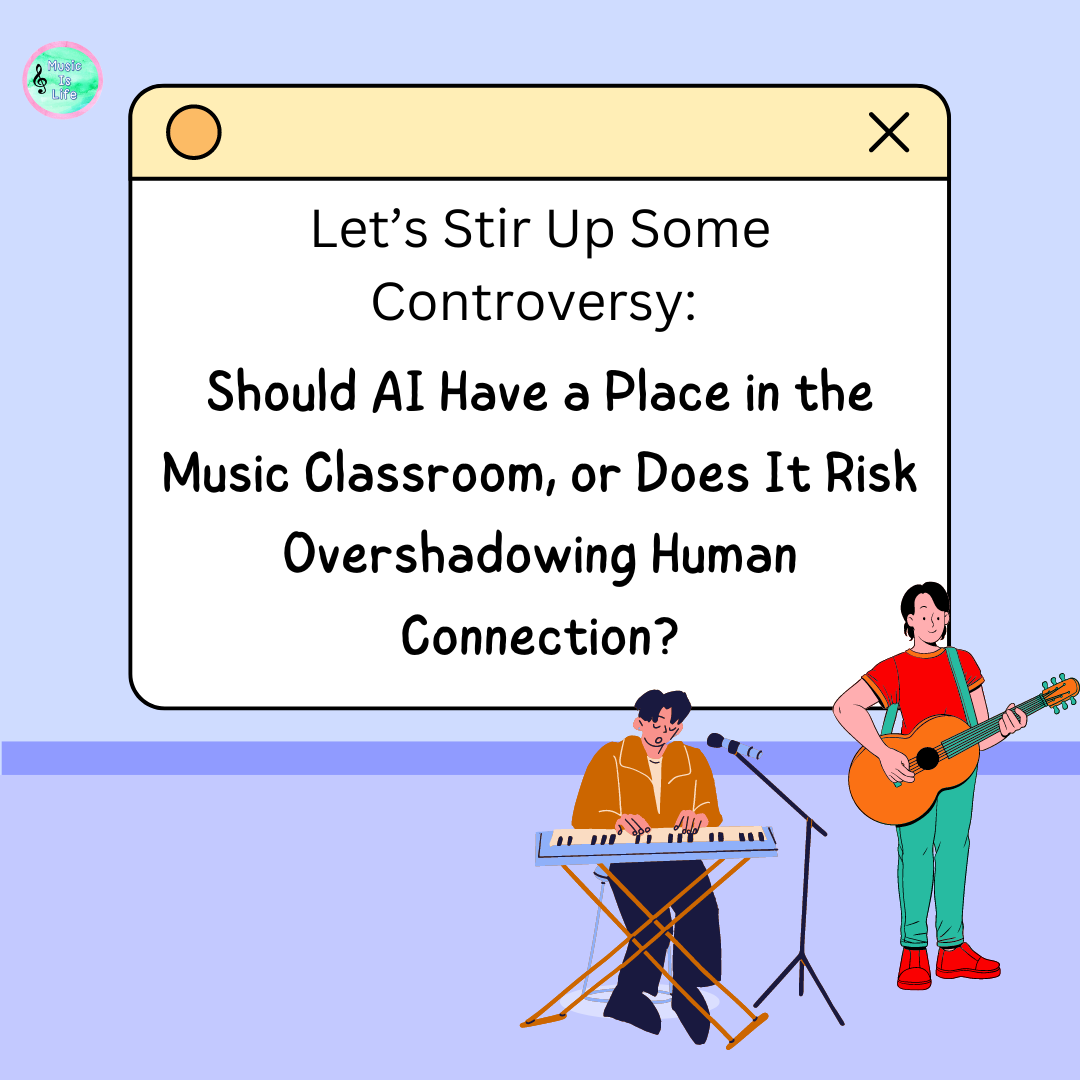
Music education has long been a realm where human interaction and personal mentorship play a crucial role. The teacher’s guidance, the student’s personal growth, and the shared experiences within the classroom create a rich tapestry that has defined music education for generations. But as technology advances, a new player is entering this space: Artificial Intelligence. This raises a provocative question: should AI have a place in the music classroom, or does it risk overshadowing the irreplaceable value of human connection?
The Case for AI in Music Education
AI has made impressive strides in various fields, and music education is no exception. Imagine a music classroom where AI-driven tools provide personalized feedback on students’ performances. These tools can analyze pitch, rhythm, and dynamics with an accuracy that can be both immediate and insightful. For a student struggling with a specific passage, an AI system could offer tailored exercises and corrective advice, helping them to improve more efficiently than traditional methods might allow.
Moreover, AI can facilitate access to diverse musical styles and techniques that might otherwise be out of reach for many students. With AI, learners can experiment with various genres, explore complex compositions, and even collaborate with virtual ensembles from around the globe. The breadth and depth of resources available through AI could significantly enrich a student’s musical experience.
The Human Element: Why It Matters
However, the integration of AI into music education isn’t without its concerns. At the heart of music teaching is the mentor-student relationship—a dynamic that fosters not just technical skill but emotional growth, artistic expression, and personal connection. Music educators don’t just teach notes and rhythms; they inspire creativity, provide encouragement, and nurture a student’s passion for music.
Human teachers offer invaluable feedback that goes beyond what can be quantified. They can interpret the nuances of a student’s performance, understanding their unique strengths, weaknesses, and emotional states. This empathetic approach to teaching is something AI, despite its advancements, cannot fully replicate. The subtleties of human interaction—such as encouragement during a challenging piece or celebrating a student’s breakthrough—play a critical role in building confidence and a love for music.
The Risk of Over-Reliance on AI
One significant risk is that over-reliance on AI tools could diminish the importance of these human interactions. If students become too dependent on AI for feedback and practice, they might miss out on the deeper, more personal insights that come from a human teacher. There’s also the concern that AI could contribute to a more transactional view of learning, where interactions are more about data and less about meaningful connections.
Furthermore, music education is not just about mastering technical skills; it’s about fostering a deep, personal engagement with music. The experiences shared in a classroom—performing together, discussing interpretations, and even just enjoying the art of music—create a communal and emotional environment that AI, with all its computational power, cannot fully replicate.
Finding the Balance
So, where does this leave us? Should we embrace AI wholeheartedly, or should we proceed with caution, safeguarding the human elements of music education that we value so much? The answer likely lies in finding a balance. AI can complement and enhance traditional teaching methods, providing valuable resources and personalized feedback while still preserving the essential human connections that make music education so powerful.
Incorporating AI could allow educators to focus more on the creative and emotional aspects of teaching, using technology to handle routine tasks and provide additional support. This hybrid approach could harness the best of both worlds, blending technological innovation with the irreplaceable value of human touch.
A Final Note
Before I leave you to ponder these questions, there’s a twist: the entire content of this blog post was generated with the help of AI. As you reflect on the role of artificial intelligence in music education, remember that even the insights shared here come from a machine. This exercise itself illustrates the potential and limitations of AI, showcasing its capability to engage in complex topics while highlighting the irreplaceable value of human thought and creativity.
AI in music education can be a powerful tool, but it should not overshadow the human connections that are central to the learning process. It’s up to us to navigate this balance thoughtfully and ensure that the essence of music education remains as vibrant and human as ever.
Thanks for reading!
Final note from a NON-Robot: In creating (NOT WRITING) this blog post, I wanted to TEST the capabilities of artificial intelligence and decided it would be best to let the ENITRE post be written by AI. I did not edit it at all for posterity.
What are your personal thoughts on this topic? When did you catch on to the fact that this post was AI-created? Please add your thoughts and opinions to the comments.


Leave a Reply